


How to Unite Tech and Marketing for Better Online Visibility
Key Takeaways
-
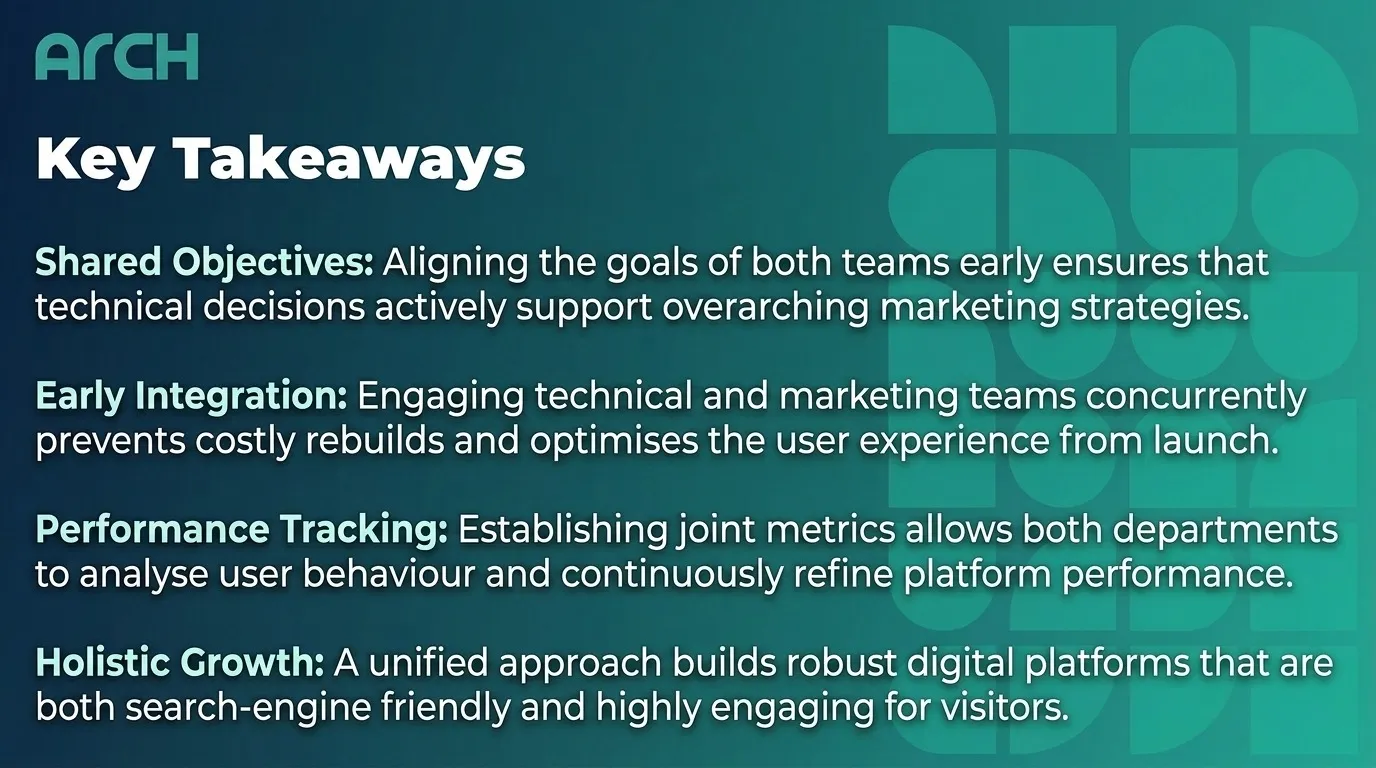
Shared Objectives: Aligning the goals of both teams early ensures that technical decisions actively support overarching marketing strategies.
-
Early Integration: Engaging technical and marketing teams concurrently prevents costly rebuilds and optimises the user experience from launch.
-
Performance Tracking: Establishing joint metrics allows both departments to analyse user behaviour and continuously refine platform performance.
-
Holistic Growth: A unified approach builds robust digital platforms that are both search-engine friendly and highly engaging for visitors.
The Power of a Unified Digital Strategy
For many businesses, technical development and digital marketing have traditionally operated as entirely separate entities. Developers focus on building functional infrastructure, while marketers concentrate on driving traffic and engaging audiences. However, maintaining this rigid divide can severely limit a company’s potential for digital growth.
In today’s competitive landscape, building a successful digital presence requires a seamless blend of both disciplines. A platform that looks brilliant but loads slowly will frustrate users and damage search rankings. Conversely, an incredibly fast site with a poor user journey will struggle to convert even the most targeted marketing traffic.
When these departments collaborate from the very beginning, they create high-performance platforms that serve both the user and the business. By harmonising their efforts, enterprises can construct robust digital assets that maximise online visibility and support long-term strategic growth.
Breaking Down Departmental Silos
Historically, technical teams and marketing departments have measured success using entirely different metrics. Developers might celebrate clean code and rapid deployment times, while marketers focus on click-through rates and conversion figures. This fundamental disconnect often results in platforms that fail to meet broader business objectives.
To overcome this challenge, businesses must foster a culture of transparent communication. Regular cross-departmental meetings can help both teams understand the distinct pressures and priorities that the other faces. When developers understand the marketing goals behind a feature, they can build it to capture the right data and deliver the best user experience.
Ultimately, removing these silos transforms two separate departments into a single, cohesive engine for growth. This collaborative mindset ensures that marketing campaigns are fully supported by technical infrastructure, leading to a much smoother journey for the end user.
Embedding Marketing Within Technical Frameworks
A common pitfall in digital projects is treating marketing as a final step to be added just before launch. For true online visibility, technical infrastructure must be designed with marketing requirements embedded from the outset. Search engines place heavy emphasis on technical factors such as site speed, mobile responsiveness, and clean site architecture.
This is where a hands-on, collaborative partnership becomes invaluable. By partnering with experienced web and app developers, businesses can ensure that fundamental technical architecture is built to support aggressive marketing strategies. Expert developers will inherently understand the need for properly structured code that allows search engines to easily crawl and index content.
When marketing is integrated into the core build, the resulting platform is naturally optimised to attract and retain traffic. Marketers spend less time battling technical debt and more time focusing on creative campaigns that drive measurable commercial growth.
Collaborative Metrics for Continuous Improvement
Building a high-performance platform is not a one-off task; it requires ongoing maintenance and refinement. Both development and marketing teams must commit to analysing the same set of performance metrics post-launch. By tracking user behaviour and platform stability simultaneously, the combined team can identify performance bottlenecks quickly.
For example, if a marketing team notices a high bounce rate on a specific landing page, technical teams can investigate potential loading delays or mobile rendering issues. Working together, they can deploy targeted fixes that immediately improve the user experience and protect the marketing budget. This shared accountability ensures the platform remains highly competitive.
A unified analytics dashboard is an incredibly effective tool for sustaining this ongoing synergy. Providing both departments with access to real-time data fosters an environment where technical enhancements and marketing tweaks are deployed in perfect harmony.
Conclusion
Optimising the synergy between technical development and digital marketing is no longer an optional luxury; it is a fundamental requirement for modern digital success. When these internal teams operate in harmony, they create robust platforms that excel in both technical performance and online visibility.
By breaking down historical silos and aligning key objectives, enterprises can ensure their digital assets work much harder for their business. This collaborative approach not only improves search engine rankings and user retention but also establishes a solid foundation for long-term, scalable growth. Ultimately, a united front consistently delivers the most compelling and successful digital experience.
Frequently Asked Questions
Why is it important for developers and marketers to work together?
Collaboration ensures that the technical foundation of a platform directly supports marketing goals, such as search engine visibility and user engagement. It prevents problematic scenarios where a site functions well technically but fails to convert visitors into customers.
How can we align these teams if they have historically worked in silos?
Start by establishing shared key performance indicators (KPIs) and scheduling regular cross-departmental planning sessions. Encouraging transparent communication helps both teams understand how their specific roles contribute to the overarching success of the project.
What role does technical development play in online visibility?
Technical development directly influences visibility through vital factors like site speed, mobile responsiveness, and structural architecture. Search engines prioritise platforms that are fast, secure, and easy to crawl, all of which are strictly managed by the development team.
